
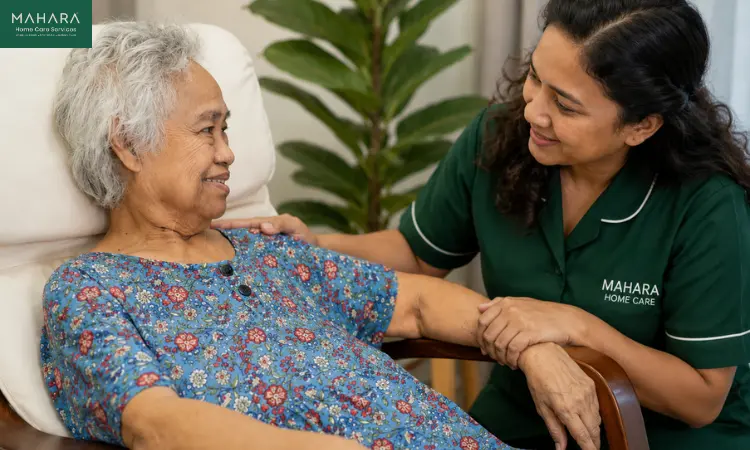
When a loved one is facing a serious, long-term illness, the question families ask most often is not just about treatment — it is about comfort, dignity, and quality of life. Palliative care for elderly at home addresses exactly this: the physical symptoms, emotional needs, and daily support that older patients require when aggressive curative treatment is no longer the right path, or when managing illness at home is simply what the family and patient need most.
A peer-reviewed study published in BMC Palliative Care (November 2024) found that one in eight older adults in India has supportive and palliative care needs. Yet HelpAge India reports that more than 80% of elderly patients who need palliative care have no access to it — particularly in non-metropolitan communities. This gap is precisely what professional, palliative care at home addresses for Indian families.
For Indian families, home is where dignity lives. An elderly parent recovering from cancer, managing heart failure, or living with dementia does better — physically and emotionally — in a familiar environment with family nearby than in an institutional ward with rotating staff and restricted visiting hours. Palliative care at home brings qualified clinical support to where the patient already is — and to where they most want to be.
This article is for informational purposes only. Care decisions for elderly family members should always be made in consultation with a qualified physician or licensed palliative care agency.
What is Palliative Care?
Palliative care is specialised medical and emotional support that focuses on improving the comfort, dignity, and quality of life of patients with serious illness — rather than on curing the underlying condition. It is not the same as giving up on treatment. It is recognising that the patient’s daily experience of life matters as much as the clinical outcome, and addressing both together.
The key distinction from curative care: curative treatment targets the disease itself. Palliative care targets the person living with the disease. Both can be provided at the same time — in fact, the Indian Association of Palliative Care (IAPC) recommends that palliative care be integrated early in a serious illness journey, not reserved only for end-of-life stages.
Palliative care covers four core areas:
-
- Pain management: Controlling chronic or acute pain through medication schedules, positioning support, and regular assessment — so the patient is not left to manage pain without clinical guidance
-
- Emotional support: Addressing depression, anxiety, loneliness, and fear — both for the patient and for family members managing the caregiving burden
-
- Nursing care: Wound dressing, vital monitoring, medication administration, catheter care, and daily health assessment carried out by a qualified nurse at home
-
- Daily living assistance: Bathing, grooming, mobility support, meal preparation, and hygiene — preserving the patient’s dignity and independence in activities they would otherwise struggle with alone
At home, these four pillars are delivered in the patient’s own space, by caregivers who build a consistent relationship with the patient over time. This clinical and emotional continuity is something that hospital-based palliative care, with its rotating staff and time constraints, cannot consistently provide.
Why Elderly Patients Need Palliative Care
Ageing brings physical change that no amount of determination reverses. For many elderly patients, the challenge is not a single disease but several overlapping conditions — diabetes, hypertension, arthritis, heart failure, kidney disease — each managed with its own medication schedule, each with its own symptoms, each requiring monitoring that informal family caregiving cannot safely sustain long-term.
The emotional toll compounds the physical. Many elderly patients experience loneliness — particularly those whose children work in other cities or countries. Mobility limitations mean they cannot socialise, attend the religious services that gave their lives structure, or manage their own daily routines without assistance. The loss of independence is itself a source of profound distress, and it is rarely addressed in a clinical OPD appointment.
For elderly patients, regular hospital visits become a significant physical burden. Transport to a hospital, waiting in queues, managing the journey with limited mobility or pain — these factors cause many elderly patients to miss follow-up appointments and medication reviews. Elderly care services at home through a professional palliative care agency replace most of these hospital visits with care delivered where the patient already is.
Bedridden patients — those who cannot leave their beds due to stroke, paralysis, advanced cancer, or severe arthritis — require round-the-clock monitoring and assistance that no family, however devoted, can provide alone without professional support and at serious cost to their own health and livelihood.
Major Benefits of Palliative Care for Elderly at Home
1. Comfort of Staying at Home
Patients in familiar environments with family nearby report lower anxiety, better sleep quality, and greater willingness to participate in their care plan than those in clinical institutions. For elderly patients, a hospital environment can be disorienting — different sounds, different smells, different faces at every shift — and this disorientation actively worsens recovery and increases post-operative delirium risk.
At home, an elderly patient can wake up in their own bed, follow their own prayer routines, eat food prepared to their taste, and fall asleep to the sounds of their own household. These seem like small comforts. For a seriously ill person, they are not small — they are the texture of dignity maintained through illness.
2. Better Pain and Symptom Management
Pain in elderly patients with chronic illness is frequently undertreated — either because the patient does not report it clearly, the family does not recognise it, or the clinical visit does not allow adequate assessment time. A palliative care nurse at home monitors pain daily, adjusts positioning, ensures medication is taken on schedule, and reports changes to the treating physician before they escalate into a crisis.
For elderly patients with palliative care for heart failure, symptom management at home is particularly important. Breathlessness, fluid retention, fatigue, and chest discomfort are the daily realities of advanced heart failure — and these symptoms worsen with the exertion of hospital travel. Home-based monitoring — daily weight checks, oxygen saturation readings, diuretic compliance — keeps the heart failure patient stable without requiring hospitalisation for every exacerbation.
3. Personalised Care and Attention
In a hospital ward, one nurse manages 8–12 patients on a rotating roster. In a home palliative care arrangement, one nurse or caregiver is dedicated to one patient. This ratio produces care that is genuinely tailored: the caregiver knows the patient’s habits, preferences, pain patterns, and emotional state on that particular day.
Individual care plans — developed in consultation with the treating physician and adjusted as the patient’s condition changes — mean the care actually fits the person receiving it. For a patient whose condition fluctuates day to day, as is common in advanced heart failure, cancer, or dementia, this flexibility is clinically meaningful, not just a comfort preference. See Mahara Home Care’s palliative care services for individual care plan details.
4. Emotional and Mental Health Support
Depression and anxiety are among the most underaddressed dimensions of elderly illness in India. Families focus — understandably — on physical symptoms. The patient’s emotional experience often goes unspoken. A trained palliative care caregiver creates space for that conversation — providing companionship, listening, and emotional presence that neither a busy family nor a clinical nurse in a hospital setting can consistently offer.
For family caregivers, the emotional benefit is equally significant. Knowing that a trained, accountable professional is present reduces the anxiety that families carry constantly when managing a seriously ill parent at home. Palliative care agencies that provide caregiver support — practical guidance and emotional acknowledgement for the family — address the full impact of serious illness, not only the patient’s immediate symptoms.
5. Reduced Hospital Visits
For an elderly patient with mobility limitations, every hospital visit is a logistical event: arranging transport, managing the physical journey, waiting in an unfamiliar OPD environment, returning home exhausted. For patients with serious illness, this repeated travel adds stress and infection exposure without necessarily improving clinical outcomes for conditions being managed rather than cured.
Home-based palliative care replaces most routine hospital visits with home monitoring. Vital signs, wound dressing, medication administration, and symptom assessment are all managed at the patient’s bedside. The treating physician reviews reports remotely or through scheduled visits. This is a clinically sound redistribution of where care is delivered — not a compromise on its quality.
6. Improved Quality of Life
Quality of life in palliative care is measurable: the patient’s ability to sleep comfortably, eat with appetite, participate in conversations, follow personal routines, and maintain emotional connections. Home-based palliative care supports each of these dimensions simultaneously — something a hospital environment, by design, cannot prioritise in the same way.
A patient whose pain is controlled, whose symptoms are monitored, who receives emotional companionship, and who retains their daily routine at home has a measurably better quality of life than one confined to a clinical environment without these supports. For elderly patients who may be managing an illness for months or years — not days — this sustained quality of life is the entire point of the care arrangement. Mahara Home Care’s elderly care services are designed around this long-term quality-of-life model.
Home palliative care vs hospital-based care — at a glance:
| Care Dimension | Home Palliative Care | Hospital / Nursing Home Care |
| Environment | Familiar home — own bed, family, personal routines intact | Clinical ward — unfamiliar, rotating staff, institutional |
| Emotional comfort | High — family present continuously, emotional bonding natural | Lower — visiting hours limited, isolation common in elderly |
| Infection risk | Low — controlled home setting, dedicated nurse-to-patient ratio | Higher — hospital-acquired infections affect 10–15% of patients (WHO, 2022) |
| Nurse attention ratio | 1:1 — the patient is the only clinical responsibility | Approximately 1:8 to 1:12 in typical general wards |
| Pain management | Nurse monitors continuously at scheduled intervals at home | Response time depends on ward staffing and shift schedule |
| Family involvement | Full — family participates in daily care decisions | Limited by hospital protocols and visiting restrictions |
| Daily routine | Patient retains own food, sleep, prayer, and personal schedule | Routine set by hospital protocol, not patient preference |
| Long-term suitability | High — care intensity adjusts as condition changes at home | Hospital admission typically for acute phases only |
Importance of Professional Palliative Care Services
The difference between professional palliative care and informal caregiving is not attitude — it is training, accountability, and clinical competence. A devoted family member provides emotional presence and basic assistance. A qualified palliative care nurse from a reputable palliative care agency adds the clinical skills that protect the patient from avoidable complications: infection from incorrect wound technique, medication error from missed doses, delayed emergency response from unrecognised warning signs.
Professional palliative care through the best palliative care service providers includes:
-
- INC-registered nursing staff: GNM- or B.Sc.-qualified nurses registered with the Indian Nursing Council — not general household helpers assigned medical tasks beyond their training
-
- Regular patient monitoring: Vital signs, pain scores, symptom tracking, medication compliance — documented and shared with the treating physician on a daily basis
-
- Emergency response protocols: Trained recognition of clinical deterioration — breathing changes, consciousness changes, severe pain escalation — with immediate escalation to the physician or emergency services
-
- Hygiene and infection prevention: Aseptic technique for wound care, catheter management, and any invasive procedure — reducing the infection risk that informal caregiving cannot address
-
- Family stress reduction: A professional team taking clinical responsibility allows family members to return to the role of loving presence rather than overwhelmed medical manager
When evaluating palliative care agencies, ask directly about nurse qualifications, background verification of all staff, the care plan documentation process, and 24/7 emergency support availability. Reputable agencies provide all of this in writing before the first visit.
Palliative Care for Heart Failure Patients
Heart failure is one of the most common serious conditions requiring palliative care for heart failure management in elderly Indian patients — and one of the most demanding to manage at home without professional support. The combination of breathlessness, fatigue, fluid retention, and chest discomfort means that even simple activities like walking to the bathroom become exhausting. Hospital admissions for heart failure exacerbations are distressing and expensive. Home-based palliative monitoring reduces both the frequency and severity of these admissions.
Specific challenges for elderly heart failure patients that palliative care at home addresses:
-
- Breathlessness: Positioning support, oxygen monitoring where prescribed, and breathing exercises tailored to the patient’s current capacity — reducing the panic that accompanies acute breathlessness
-
- Fluid retention: Daily weight monitoring to detect fluid accumulation before it becomes an acute crisis; medication reminders for diuretics at correct times; dietary guidance on fluid and sodium intake
-
- Medication complexity: Heart failure patients manage multiple medications with strict timing. A nurse ensures compliance, monitors for adverse effects, and communicates changes to the cardiologist
-
- Fatigue and weakness: Energy conservation strategies, activity prioritisation, and pacing assistance so the patient participates in meaningful daily activities without overexertion
-
- Emotional care: Fear of another hospitalisation, grief over reduced independence, and anxiety about prognosis are significant emotional realities for heart failure patients. Regular caregiver presence and emotional acknowledgement are part of comprehensive palliative care, not optional add-ons
The Indian Association of Palliative Care (IAPC) recommends that palliative care for heart failure patients be integrated early — not only when the patient reaches an end stage. Early integration means better symptom control, fewer emergency hospital admissions, and a patient who retains meaningful quality of life for longer.
Growing Demand for Palliative Care in India
India’s elderly population is growing at a pace that its healthcare infrastructure is not yet fully designed to absorb. According to the BMC Palliative Care 2024 study, the proportion of Indians aged 60 and above is expected to reach 20.8% by 2050 — meaning one in five Indians will be a senior citizen. The demand for long-term, community-based, home-centred care is not a future projection — it is a present clinical reality in every Indian city and town.
In Mangalore, this demand is visible. Elder care services in Mangalore providers have seen consistent growth in enquiries for palliative and chronic illness home care, driven by families managing elderly parents with cancer, heart failure, kidney disease, stroke, and dementia. Mangalore’s medical infrastructure — anchored by Kasturba Medical College Hospital, Father Muller Medical College Hospital, and Unity Hospital — provides excellent acute care. The gap is the period after hospital discharge, and the long-term management phase where families need sustained clinical support at home.
Mangalore holds a significant place in Karnataka’s palliative care history. The city is home to one of the first dedicated palliative hospice centres in the region. Palliative care services in Mangalore through professional home care agencies extend that tradition of compassionate care into the homes of families who cannot access residential hospice care but need the same quality of attention and clinical support.
The broader national pattern reflects Indian family values: given a choice, most elderly patients and their families prefer care at home over institutional admission. Palliative care in Mangalore is increasingly meeting this preference through professional home-based services that bring clinical-grade support directly to the patient — without requiring the family to choose between their loved one’s dignity and their clinical needs.
How to Choose the Best Palliative Care Service
Not all home care providers offer the same standard of palliative support for elderly patients. These are the questions that distinguish a reliable agency from an unreliable one:
1. Verify Nurse Qualifications and INC Registration
Palliative care nurses must hold GNM or B.Sc. Nursing qualifications and be registered with the Indian Nursing Council (INC). Ask to see the INC registration certificate before any service begins. For ICU-level home care, additional critical care certification is required. Basic household helpers or unqualified attendants should never be assigned clinical palliative care tasks for a seriously ill elderly patient.
2. Confirm Agency Reputation and Experience
Ask specifically about the agency’s experience with palliative care for elderly patients — not general nursing experience alone. Palliative care requires emotional training, pain management knowledge, and end-of-life care competence that general nursing training does not automatically cover. Read verified Google reviews and ask for references from families who have used the best palliative care service from that specific agency.
Check how long the agency has been operating, how many families they have served, and whether they hold any quality certifications. Experienced agencies will share this information without hesitation. Agencies that cannot or will not are themselves a data point.
3. Ask About 24/7 Emergency Support
Palliative patients — particularly those with heart failure, advanced cancer, or neurological conditions — can deteriorate rapidly and at any hour. The agency must have a 24/7 helpline, a documented escalation protocol, and a clinical supervisor reachable outside business hours. Confirm this explicitly and in writing before the care arrangement begins.
4. Require a Personalised, Written Care Plan
A reputable agency develops a written care plan aligned to the treating physician’s guidance — specific pain management protocols, monitoring frequency, medication schedules, and warning signs for escalation. Generic care without alignment to the patient’s specific diagnosis is a patient safety risk, not just a service quality issue.
The care plan should be reviewed and updated as the patient’s condition changes. Palliative patients rarely stay static — conditions improve in some periods and decline in others. An agency that treats the care plan as a one-time document is not providing genuine palliative care management.
5. Check Hygiene, Safety, and Caregiver Verification
All caregivers should have undergone police verification and identity confirmation through the agency before entering a patient’s home. Wound care and any invasive procedure must be performed using aseptic technique and clinical-grade materials. Ask for caregiver credentials and verification documentation in writing before the first visit.
When evaluating caretaker services in Mangalore, ask the agency whether their caregivers have been background-checked through Mangalore city police and whether they carry documented credentials on every visit. Reputable providers confirm this without hesitation — it is standard practice, not an exceptional request.
Conclusion
The benefits of palliative care for elderly at home are not abstract: better pain control, less time in hospital, more time with family, and the preservation of the dignity and daily routine that define a person’s sense of self even during serious illness. For Indian families managing a parent with cancer, heart failure, dementia, or another life-limiting condition, home-based palliative care is the practical, compassionate, and clinically appropriate choice.
Choosing professional palliative care from a qualified, verified agency — rather than depending entirely on informal family caregiving — protects the patient, supports the family, and ensures that the care delivered is genuinely matched to the patient’s clinical and emotional needs. The best time to arrange that care is before a crisis makes the decision urgent.
Mangalore’s growing network of professional palliative care providers, its established medical infrastructure, and its community culture of compassionate care for elders create the conditions where home-based palliative care genuinely works. Families who access it early — before the situation is beyond informal management — consistently achieve better patient and family outcomes than those who wait.
 This article is for informational purposes only. All decisions about palliative care arrangements for elderly family members must be made in consultation with a qualified physician or licensed palliative care agency.
| COMPASSIONATE ELDERLY CARE AT HOME — MAHARA HOME CARE Looking for trusted and compassionate palliative care support for your loved ones? Mahara Home Care provides professional elderly care and home nursing services with experienced caregivers, personalised attention, and medical support in the comfort of your home. maharahomecare.com |
Frequently Asked Questions About Palliative Care for Elderly at Home
1. What are the seven common palliative symptoms?
Palliative care addresses seven commonly managed symptom categories in elderly patients:
-
- Pain: Chronic or acute pain from illness, surgery, or treatment
-
- Breathlessness: Difficulty breathing — particularly common in heart failure, COPD, and lung conditions
-
- Fatigue and weakness: Severe tiredness limiting daily activity and independence
-
- Nausea: Discomfort affecting appetite and nutritional intake
-
- Loss of appetite: Reduced ability or desire to eat, affecting strength and recovery
-
- Depression and anxiety: Emotional distress — fear, grief over lost independence, loneliness
-
- Constipation: Common side effect of pain medications and reduced mobility in bedridden patients
A qualified palliative care physician or nurse assesses and manages these symptoms individually, based on the patient’s specific diagnosis, medication profile, and personal circumstances. The IAPC provides clinical guidelines for managing each of these symptom categories in the Indian context.
2. What services are included in palliative care at home?
Home palliative care services typically include pain and symptom management, wound dressing and personal hygiene support, vital sign monitoring, medication administration and reminders, physiotherapy for mobility and comfort, emotional companionship for the patient, emotional support for family caregivers, nutritional guidance, and coordination with the treating physician. Services are tailored to the patient’s specific diagnosis and family circumstances. Consult a licensed palliative care agency for a personalised service plan before any arrangement begins.
3. How do I choose the best palliative care service for elderly patients?
Verify nurse qualifications (GNM or B.Sc. Nursing, INC-registered), confirm police verification of all caregivers, ask about 24/7 emergency support, require a written care plan aligned to the treating physician’s guidance, check agency experience specifically with elderly palliative patients, and read verified reviews. Ask for credentials in writing before any service begins. A reputable agency will provide all of this without hesitation.
4. How does palliative care help senior citizens with chronic illnesses?
Palliative care helps elderly patients with chronic illness by managing pain and physical symptoms effectively, providing regular monitoring to catch complications early, offering emotional companionship that reduces loneliness and anxiety, assisting with daily living activities so the patient maintains dignity, reducing the need for hospital visits, and supporting family caregivers who are managing the care burden alongside their professional and family responsibilities.
5. How much does home palliative care cost in Mangalore?
Home palliative care costs vary based on care intensity, nurse qualification, and required service hours. General estimates for Mangalore: a 12-hour nursing visit for palliative support ranges from approximately ₹1,000–₹2,500; 24/7 continuous care ranges from ₹2,500–₹6,000 per day; monthly packages start from approximately ₹20,000 depending on care complexity. Contact Mahara Home Care for a written, personalised quotation based on your family member’s specific condition and care requirement.>
About the AuthorVijesh Kumar is a co-founder of Mahara Home Care with experience in home healthcare and patient support services. He focuses on providing reliable, compassionate care solutions for elderly people, patients, and families across Udupi, Manipal, Mangalore, Mysore and nearby areas.
|