This article is for informational purposes only and does not replace medical advice. Nursing care at home should always follow the patient’s doctor-prescribed treatment plan; consult the treating physician before making any changes to medication or care.
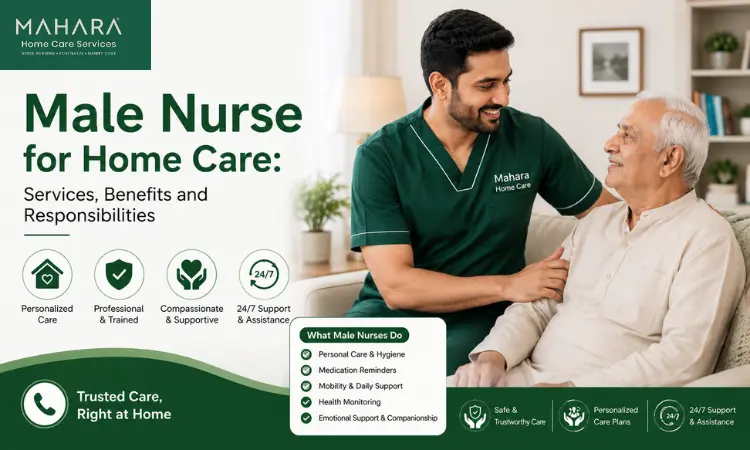
A male nurse for home care is a trained nursing professional who provides medically supervised care, such as monitoring, medication support, wound care and mobility assistance, at a patient’s home rather than in a hospital. Some families specifically request a male nurse for reasons of comfort, privacy or physical support during transfers, particularly for male patients recovering from surgery, illness or long-term conditions. The right choice depends on the patient’s condition and personal comfort, not on one gender being inherently better suited than the other.
When a family brings a loved one home after surgery, or starts arranging long-term support for an elderly parent, the question of who provides that care matters as much as what care is provided. A male nurse for home care is a trained nursing professional delivering medically supervised support, patient monitoring, medication support, post-surgery care, and mobility assistance within the home rather than a hospital ward. For some patients and families, particularly where personal care, physical transfers, or male-specific comfort and privacy are involved, a male nursing professional is the more comfortable fit. This matters for patients recovering from illness, surgery, injury, or managing a long-term health condition, where the comfort of receiving care at home, combined with a plan built around the patient’s actual prescribed treatment, day-to-day condition and personal dignity, makes a real difference to how recovery goes. Safety, privacy, hygiene and respectful communication are non-negotiable parts of that arrangement, not extras. Families searching for a male nurse for home care in Mysore specifically will find this guide covers what these services include, their benefits, a nurse’s professional responsibilities, which patients typically need this kind of support, and how to choose the right professional, including through providers like Mahara Home Care.
What Is a Male Nurse for Home Care?
A male nurse for home care is a trained, qualified nursing professional who delivers hands-on medical and personal care support at a patient’s home under the direction of the patient’s treating doctor. This differs from a general caretaker in scope: a nurse is trained to carry out clinical tasks within their professional qualifications, including medication administration, wound care, and monitoring vital signs, while a caretaker’s role is centred on non-clinical daily support such as hygiene, mobility help and companionship. Any nursing procedure performed at home must stay strictly within the individual nurse’s training, qualifications and scope of practice, and should follow the patient’s prescribed care plan rather than independent judgement about medication or treatment.
Why Choose a Male Nurse for Home Care?
A male nurse isn’t automatically a better choice than a female nurse; the right fit depends on the patient’s condition, comfort and personal preference. That said, there are situations where families and patients specifically prefer a male nursing professional:
- Personal care tasks, bathing, dressing, toileting, where a male patient may feel more comfortable with same-gender assistance
- Physically demanding mobility support, such as transferring a heavier patient between bed and wheelchair, where build and physical technique matter
- Male patients recovering from surgery who prefer same-gender support during a vulnerable recovery period
- Family dynamics or cultural preference around who provides intimate personal care
These are reasons of comfort and practical fit, not a claim that male nurses are more skilled or capable. Female nurses remain the right and often preferred choice for many patients and families, including for identical clinical tasks.
Services Provided by a Male Nurse at Home
The exact services a home nurse can provide depend on their individual training and the scope your treating doctor has authorised. Common areas include:
Patient Monitoring
Tracking vital signs, blood pressure, pulse, temperature, oxygen levels where applicable, and noting any changes worth reporting to the family or treating doctor.
Medication Support
Administering medication according to the prescribed schedule and dosage set by the treating doctor. A nurse does not independently start, stop or adjust medication; any change goes through the prescribing physician.
Post-Surgery Nursing Care
Wound monitoring, dressing changes within scope, mobility support, and following discharge instructions during the recovery period after a hospital stay.
Elderly Care
Daily health monitoring, medication reminders, hygiene support, fall-risk awareness, and general companionship for seniors managing age-related conditions at home.
Mobility and Transfer Assistance
Safe support moving between bed, chair and bathroom for patients with limited mobility, reducing fall risk and physical strain on family members attempting this alone.
Personal Care Support
Assistance with bathing, dressing and grooming, delivered with attention to the patient’s comfort, privacy and dignity throughout.
Catheter and Other Nursing Support
Catheter care and similar procedures, where the individual nurse holds the specific training and the treating doctor has authorised it, are handled following clinical protocol rather than general judgement.
Support for Patients With Long-Term Conditions
Ongoing support for patients managing chronic conditions, consistent routine, monitoring for changes, and coordination with the family and the treating doctor over an extended period.
Benefits of Hiring a Male Nurse for Home Care
Personalised Care
Care built around the individual patient’s condition, prescribed treatment plan and daily routine, rather than a generic care schedule.
Comfort and Convenience
Receiving care in familiar surroundings, without the disruption and travel that repeated hospital or clinic visits involve.
Better Support for Mobility
Physical support for transfers and movement that some families find easier to manage with a male nursing professional, particularly for heavier or less mobile patients.
Improved Recovery Environment
A calmer, familiar setting that can support a smoother recovery routine compared to an unfamiliar hospital ward, alongside the patient’s prescribed treatment.
Support for Family Members
Trained support relieves family members of tasks they may not be equipped to handle safely alone, particularly clinical tasks and physically demanding transfers.
Privacy and Dignity
Personal care delivered respectfully, in a setting the patient controls, rather than in a shared hospital environment.
Responsibilities of a Male Nurse in Home Care
A home nurse’s core responsibilities include following the patient’s doctor-prescribed care plan exactly as directed, accurately monitoring and recording the patient’s condition, maintaining hygiene and infection-control standards, communicating clearly and promptly with the family and treating doctor about any changes, and working strictly within their own professional qualifications and training. A responsible nurse escalates anything outside their scope to the treating doctor rather than attempting it independently, and never changes medication or treatment without the physician’s direction.
Who May Need a Male Nurse at Home?
- Elderly patients needing daily health monitoring and mobility support
- Patients recovering from surgery who need wound care and supervised recovery at home
- Bedridden patients requiring regular repositioning, hygiene support and monitoring
- Patients with mobility difficulties needing physical transfer assistance
- Patients managing long-term or chronic health conditions who need consistent, ongoing support
Male Nurse for Home Care in Mysore
Families searching for a male nurse in Mysore or broader home nursing services in Mysore can reach Mahara Home Care’s dedicated Mysore office at Door S No 5906/1, Benaka, General Thimmaiah Rd, opposite Vishal Mart, Vijay Nagar 2nd Stage, Vijayanagar, Mysuru, Karnataka 570017, or call the Mysore line directly at +91 8050030666. As with other home care services Mysore families arrange, availability of a specific male nurse depends on current staffing and the patient’s requirements at the time of enquiry, so it’s worth calling ahead with the patient’s condition and preferred shift rather than assuming immediate availability. Mahara’s broader home nursing service covers the same scope of monitoring, medication support and post-surgery care discussed above, available across its Mysore, Mangalore, Udupi and other coastal Karnataka locations.
How to Choose the Right Male Nurse for Home Care
- Confirm the nurse’s qualifications and training match the patient’s specific needs
- Ask whether the agency verifies staff identity and background before assignment
- Clarify exactly what tasks are within scope and what isn’t, in writing if possible
- Check communication practices, how often the family receives updates on the patient’s condition
- Confirm how medication changes or unexpected issues are handled, always through the treating doctor
- Ask about shift flexibility, since needs can change as recovery progresses
Whether you’re evaluating a home nurse in Mysore or elsewhere, a nurse’s qualifications should be verifiable, and reputable providers register nursing staff appropriately; the Indian Nursing Council maintains the national framework for nursing registration in India, which is worth understanding as general context when evaluating any home nursing provider.
Conclusion
A male nurse for home care provides trained, medically supervised support, patient monitoring, medication support within scope, elderly care, post-surgery support, mobility assistance and personal care, delivered at home rather than in a hospital setting. The real benefits are comfort, convenience, personalised care built around the patient’s actual prescribed plan, privacy, dignity, and meaningful support for the family managing day-to-day care. Selecting a qualified, trustworthy nursing professional matters more than gender alone; verify training, scope and communication practices before committing. Done well, professional home nursing care makes ongoing patient support far more organised and manageable for families navigating recovery, elderly care, or a long-term condition, and a male nurse for home care is one part of building that support around what the patient actually needs.
Looking for a male nurse for home care in Mysore or nearby coastal Karnataka? Mahara Home Care can help match a qualified nursing professional to your patient’s specific needs. Call +91 8050030666, email info@maharahomecare.com, or book an appointment.
Frequently Asked Questions
1. Is a male nurse better than a female nurse for home care?
No, neither is inherently better. The right choice depends on the patient’s condition, comfort and personal preference. Some families prefer a male nurse for personal care tasks or physically demanding mobility support, while many patients and families are equally or better served by a female nurse for the same clinical tasks.
2. What is the difference between a nurse and a caretaker in home care?
A nurse is trained to perform clinical tasks such as medication administration, wound care and monitoring vital signs, within their professional qualifications and a doctor’s authorisation. A caretaker’s role is non-clinical, hygiene, mobility support, feeding assistance and companionship, without performing medical procedures.
3. Can a home nurse change a patient’s medication or treatment?
No. A home nurse administers medication and follows care according to the treating doctor’s prescribed plan and does not independently start, stop or change medication or treatment. Any change must come from the prescribing physician.
4. What kind of patients typically need a male nurse at home?
Elderly patients needing daily monitoring, patients recovering from surgery, bedridden patients requiring regular repositioning and hygiene support, patients with mobility difficulties needing physical transfer assistance, and patients managing long-term health conditions.
5. How do I check if a home nursing service in Mysore is reliable?
Confirm the nurse’s qualifications and training, ask whether the agency background-verifies staff, clarify the exact scope of tasks in writing, check how regularly the family receives updates, and confirm that any medication or treatment change goes through the patient’s treating doctor rather than the nurse independently.