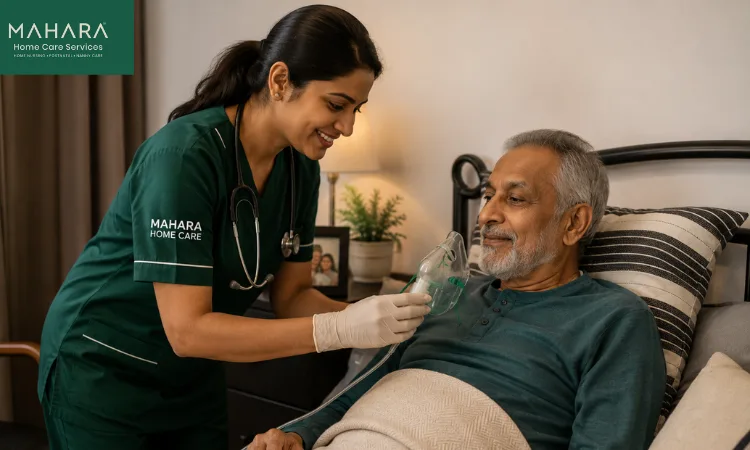
When a critically ill patient is discharged from the hospital after the acute phase of an illness, families often wonder how they can continue receiving the required level of medical support at home. Intensive Care Unit Services at home provide a structured solution by bringing skilled nursing care, continuous monitoring, essential medical equipment, and personalised support into a familiar home environment. These services can support patients recovering from major surgery, stroke, respiratory conditions, or other complex health situations, subject to the treating physician’s approval and care plan.
For families in Mangalore, Udupi, Manipal, and the wider Dakshina Kannada region, the demand for professional home-based critical care has grown steadily as families recognise that post-discharge recovery for stroke patients, ventilator-dependent patients, and post-surgical patients does not require continued hospitalization when clinical stability has been established.
Home ICU care is not about replacing hospital services during acute crises. It is about enabling patients who have passed the acute phase to recover in a familiar, family-supported environment — while maintaining the professional nursing oversight their condition requires. When properly organised with trained nurses, appropriate medical equipment, and direct coordination with the treating hospital team, intensive care at home in Mangalore offers eight significant benefits for patients and their families.
Understanding Intensive Care Unit Services at Home
What Are Intensive Care Unit Services?
Intensive Care Unit Services at home refer to the provision of critical care nursing, medical monitoring, and equipment-based support in a patient’s residence — structured to deliver hospital-comparable clinical observation and caregiving outside of a hospital setting. The term is used specifically to describe the level of nursing and monitoring complexity involved, not to imply that a home environment can replicate every capability of an acute hospital ICU.
Home intensive care is distinct from standard home nursing in three important ways: the clinical acuity of the patients it supports, the monitoring equipment used, and the nursing qualifications required. Nurses providing ICU home care carry training in critical care nursing and work within protocols defined by the patient’s treating physician.
The difference between hospital ICU care and home ICU care is one of setting and phase. Hospital ICU is appropriate during the acute crisis phase — when the patient’s condition is unstable and may require immediate specialist intervention. Home ICU care is appropriate during the stable post-acute phase — when the patient requires ongoing monitoring and nursing support but the treating physician has confirmed that continuation in a hospital facility is no longer medically necessary.
Services Typically Included in Home ICU Care
| Service | Description |
| Vital signs monitoring | Continuous or scheduled monitoring of blood pressure, heart rate, oxygen saturation, temperature, and respiratory rate |
| Ventilator support | Ventilator circuit monitoring, tracheostomy care and site hygiene, regular suctioning, and airway patency management per treating physician protocol |
| Oxygen therapy | Administration and flow management of prescribed supplemental oxygen; saturation monitoring |
| Tracheostomy care | Stoma hygiene, tube management, suctioning, and cuff pressure checks per clinical protocol |
| Feeding tube management | Nasogastric or PEG tube care, formula administration on prescribed schedule, tube patency maintenance |
| Medication administration | IV, oral, and subcutaneous medications on the treating physician’s prescribed schedule |
| Emergency escalation protocol | Defined escalation pathway to treating physician or emergency services (112) for specific monitoring thresholds |
All icu at home services must be defined by and supervised by the patient’s treating physician. No home care provider, including Mahara Home Care, implements protocols independently of the treating medical team.
Who Needs ICU at Home Services?
Patients Who Can Benefit
Home ICU care is not appropriate for every patient — it requires physician confirmation that the patient’s condition is stable enough for home transition. Patients who commonly receive home-based intensive care following discharge include:
- Post-surgical patients recovering from major cardiac, neurological, or orthopaedic surgery who require nursing oversight, wound care, and medication management beyond standard home nursing capability
- Stroke recovery patients who need continuous monitoring, neurological assessment, and mobility support during the rehabilitation phase
- Patients with respiratory disorders including COPD, interstitial lung disease, or ventilator dependence who require ongoing respiratory support and oxygen therapy at home
- Patients with neurological conditions such as Parkinson’s disease, ALS, or traumatic brain injury who require complex care coordination
- Cancer patients at various stages of treatment who require palliative symptom management, pain control, or post-chemotherapy nursing support
- Elderly patients with multiple chronic conditions requiring close monitoring, complex medication schedules, and assistance with daily care
Medical Assessment Before Home ICU Setup
Before home intensive care begins, a structured assessment is necessary to confirm that home care is safe and appropriate for the patient’s condition. This assessment covers:
Treating physician evaluation: the doctor must confirm clinical stability and provide a written care plan, medication schedule, and escalation instructions before any icu at home services arrangement begins. This is non-negotiable.
- Equipment requirements: identification of all monitoring and support equipment the patient needs, whether that can be safely installed and operated in the home, and whether backup protocols exist for equipment issues
- Caregiver readiness: family members must understand the care plan, know how to communicate with the nursing team, and have a clear plan for emergency situations
- Home environment safety assessment: adequate space for equipment, reliable power supply, access and mobility within the home, and hygiene and sanitation conditions
Home ICU Care vs. Hospital ICU Extended Stay: A Comparison
| Care Factor | Home ICU Care | Hospital ICU (Extended Stay) |
| Environment | Familiar home — family present, own routine | Clinical facility — restricted visiting hours |
| Nurse-to-patient ratio | Dedicated 1-to-1 nurse per shift | Typically 1 nurse to 2-4 patients |
| Family access | Unrestricted — family present 24 hours | Limited visiting hours only |
| Infection exposure | Lower — single-patient environment | Higher — multi-patient clinical setting |
| Patient anxiety | Lower — home, family, familiar surroundings | Higher — clinical environment, unfamiliar staff |
| Suitable phase | Stable post-acute phase | Acute crisis phase |
| Long-term cost | Often lower for stable patients in recovery phase | Higher for extended stays beyond acute phase |
| Important: Home ICU care is appropriate only for patients whose treating physician confirms clinical stability and approves home transition. Hospital ICU remains essential during the acute crisis phase of any critical illness. If in doubt about whether a patient is suitable for home care, consult the treating physician before making any decision. |
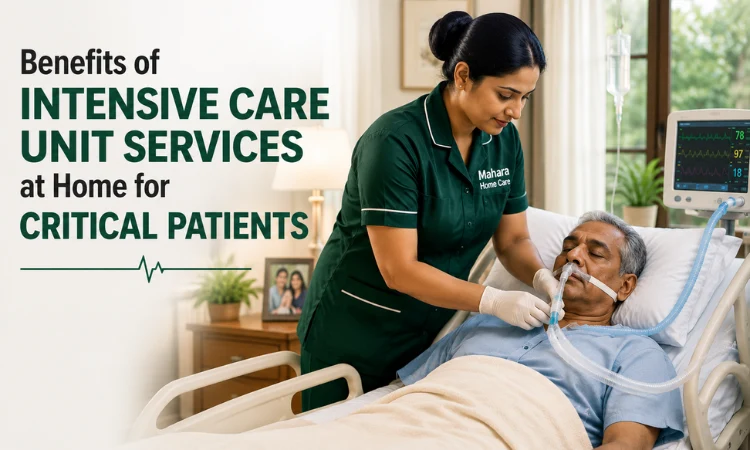
Benefit 1: Comfort and a Familiar Home Environment
Why Home Recovery Matters for Critical Patients
For patients who have spent days or weeks in a hospital ICU, the psychological impact of returning home is substantial. Intensive care at home in Mangalore places the patient back in a space where they recognise the sounds, the smells, the faces — where their family is present without time restrictions, and where their personal routines can begin to reassert themselves.
Clinical settings, despite being medically necessary during the acute phase, carry inherent stress. Beeping monitors, unfamiliar staff, night-time interruptions, and separation from family members can contribute to what clinicians call ICU-acquired weakness and post-intensive care syndrome — a constellation of physical, cognitive, and psychological difficulties that arise from prolonged ICU stays. Transitioning to home when clinically appropriate can reduce these stressors significantly.
Impact on Recovery
Patients recovering from stroke, respiratory illness, and major surgery often respond to familiar environmental cues in ways that hospital environments cannot replicate: the smell of a home-cooked meal, the voice of a grandchild in the next room, or the simple comfort of their own bed. These are not trivial factors — they directly affect patient cooperation with care, appetite, sleep quality, and emotional stability, all of which have downstream effects on physical recovery.
Better sleep quality is one of the most consistently reported benefits of home recovery for post-ICU patients. Hospital ward environments typically produce fragmented sleep through noise, interventions, and light exposure. Home environments, where sleep conditions can be controlled by the family, allow for deeper, more restorative rest — a known factor in immune function and tissue repair.
Benefit 2: Personalised One-to-One Medical Attention
Individualised Care Plans
In a hospital ICU, a single nurse may be responsible for two to four patients simultaneously. In home Intensive Care Unit Services, the assigned nurse works exclusively with one patient throughout the shift. This 1:1 ratio means the nurse develops a detailed understanding of that patient’s baseline — their normal vital sign ranges, their communication patterns, their pain responses — and is far better positioned to detect subtle changes before they become serious.
Care plans for home ICU patients are built around the specific requirements of that individual: their diagnosis, their recovery trajectory, their physician’s instructions, their dietary restrictions, their communication needs, and their family’s involvement preferences. There is no default protocol applied uniformly across patients.
Continuous Monitoring
Dedicated nursing in a home ICU setting enables a quality of observation that is difficult to achieve in a busy hospital environment. The nurse monitoring one patient continuously becomes familiar with that patient’s unique clinical picture, enabling earlier recognition of changes that warrant physician escalation.
Regular health assessments — including vital sign recording, neurological checks, wound condition evaluation, and medication response monitoring — are documented and communicated to the treating physician according to the agreed schedule. Any deterioration triggers the escalation protocol immediately.
Better Communication Between Family and Medical Team
One of the most common sources of distress for families of ICU patients is the inability to get clear, timely information about their family member’s condition. In home ICU care, the treating nurse is directly accessible to the family throughout the shift, providing real-time updates and explanations in terms the family can understand. Formal updates to the treating physician are documented and shared with the family as well.
This transparency reduces family anxiety, improves trust in the care process, and allows family members to participate actively in discussions about the patient’s care plan — something that the limited visiting hours and crowded consultation environments of hospital settings rarely permit.
Benefit 3: Reduced Risk of Hospital-Acquired Infections
Infection Risks in Hospital Settings
Hospital-acquired infections (HAIs) — also called healthcare-associated infections — are a well-documented concern in critical care settings globally. The Indian Council of Medical Research (ICMR) has identified HAIs as a significant challenge in Indian healthcare, particularly in ICU environments where patients with compromised immune systems are in close proximity to one another and share clinical equipment, staff contact surfaces, and airflow systems.
Common HAIs in hospital ICU settings include ventilator-associated pneumonia (VAP), catheter-associated urinary tract infections (CAUTI), and central line-associated bloodstream infections (CLABSI). Patients receiving icu at home services in a single-patient environment are not exposed to the cross-contamination pathways that drive HAI rates in multi-patient clinical units.
Advantages of a Home-Based Care Environment
A home environment provides a controlled, single patient care setting. The hygiene practices of the home nursing team — regular hand hygiene, proper wound care technique, sterile catheter and tube management — are applied in an environment that does not carry the microbial burden of a multi-patient clinical facility.
The family also plays a role in infection control at home: keeping the environment clean, restricting unnecessary visitors during the recovery phase, and maintaining the sterile conditions around medical equipment are all manageable in a home setting under proper guidance from the nursing team.
Particular Importance for Immunocompromised Patients
For patients with significantly reduced immune function — cancer patients undergoing or recovering from chemotherapy, elderly patients with multiple chronic conditions, and patients on long-term corticosteroid therapy — the reduced infection exposure of a home environment is not a comfort benefit. It is a clinical safety benefit. The immune system of these patients cannot mount a normal defence against organisms that would be manageable for a healthy person; minimising their exposure to novel pathogens is a legitimate clinical priority.
Benefit 4: Cost-Effective Alternative to Prolonged Hospitalisation
Financial Challenges of Extended Hospital Stays
Extended ICU hospitalisation in India carries substantial costs for families. Beyond the bed charge and ICU surcharge, families face consulting physician fees, nursing charges, diagnostic and monitoring costs, pharmaceutical costs, and the indirect costs of family members reducing or stopping work to be near the hospital. For patients requiring weeks or months of critical care monitoring, these costs accumulate rapidly.
This comparison applies specifically to the stable post-acute phase of recovery — not to the acute phase of a critical illness when hospital ICU is medically necessary. The cost comparison is relevant only when the treating physician has confirmed that the patient does not require further acute hospital care.
Cost Considerations with Home ICU Care
For patients in the stable recovery phase, professional Intensive Care Unit Services at home can represent a more financially sustainable model than continued hospitalisation — particularly for long-term recovery scenarios measured in weeks or months rather than days. Families can structure care arrangements around their specific needs: 12-hour nursing shifts when a family member is available for the other 12 hours, full 24-hour cover, or a phased reduction in nursing intensity as the patient’s condition improves.
Pricing for home ICU nursing services depends on the patient’s condition, the level of nursing skill required, the equipment involved, and the shift structure. Families should request a detailed cost breakdown from the provider and compare it clearly against the current hospital billing. For Mahara Home Care’s current service fees, contact the team directly — rates are provided based on individual patient assessment.
Long-Term Affordability for Families
For chronic conditions requiring ongoing monitoring support over months — advanced neurological conditions, chronic respiratory failure, or complex post-surgical recovery — home-based ICU care offers a structurally more sustainable model than indefinite hospitalisation. As the patient’s clinical picture improves, the intensity of home care can be scaled down in stages: from ICU-level nursing to standard nursing to caretaker support — each stage carrying a lower cost and a different skill requirement.
Benefit 5: Family Involvement in Patient Care
Importance of Family Participation
For critically ill patients, particularly the elderly and those recovering from neurological events, the presence of close family members is not simply an emotional comfort — it has functional clinical value. Patients who recognise and respond to family voices show better engagement with care routines, better appetite compliance, and improved cooperation with nursing interventions. Intensive care at home in Mangalore places this resource — the family — in the same space as the patient, without visiting hour restrictions or clinical environment constraints.
Better Understanding of the Patient’s Needs
Family members who are present during care sessions develop a practical understanding of the patient’s condition and care requirements that is impossible to acquire through brief hospital visits. They learn to recognise the patient’s normal versus abnormal presentation, how the patient communicates discomfort when verbal communication is limited, which routines the patient responds to positively, and how to support the nursing team with aspects of care that do not require clinical qualification.
This active involvement improves the continuity and quality of care across the full 24-hour period — not only during the nurse’s shift but throughout the day.
Stronger Patient-Family Bond During Recovery
Extended hospitalisation frequently strains family relationships as the patient becomes isolated in a clinical environment while family members manage the logistics of long-distance care, limited visiting, and the emotional weight of uncertainty. Home ICU care normalises the family dynamic: the patient is home, family life continues around them, meals are shared, and the patient participates in household rhythms at whatever level their condition permits.
This normalisation is particularly significant for children in the household — a grandparent or parent recovering at home remains a visible, present family member rather than a distant figure in a clinical facility.
Benefit 6: Access to Advanced Medical Equipment at Home
Equipment Commonly Used in Home ICU Care
ICU-level home care requires specific medical equipment to maintain the clinical monitoring and support the patient’s condition requires. The equipment used is determined by the patient’s diagnosis and the treating physician’s care plan. Common categories include:
| Equipment Category | Purpose |
| Cardiac and vital sign monitors | Continuous or periodic tracking of heart rate, blood pressure, oxygen saturation, and respiratory rate |
| Oxygen concentrators and cylinders | Supplemental oxygen delivery for patients with respiratory compromise |
| Mechanical ventilators (where prescribed) | Respiratory support for ventilator-dependent patients — managed per treating pulmonologist’s protocol |
| Suction machines | Airway secretion clearance for tracheostomy patients and patients with impaired cough |
| Infusion pumps | Controlled IV medication and fluid delivery at prescribed rates |
| Pulse oximeters | Continuous non-invasive oxygen saturation monitoring |
| Nebulisers | Inhaled medication delivery for respiratory conditions |
Professional Equipment Setup and Maintenance
All Intensive Care Unit Services equipment used in a home care setting is installed and configured by qualified personnel, not the family. The nursing team checks equipment functionality at the start of every shift, documents readings, and follows defined protocols for equipment alerts or failures. Family members receive clear guidance on what to do if an equipment alarm activates — and when to call the treating physician versus when to call emergency services (112).
Ensuring ICU-Level Care Quality Through Reliable Systems
The quality of home ICU care depends directly on the reliability of the monitoring systems in place. Before any home intensive care arrangement begins, the care provider should confirm: what monitoring equipment will be used, who is responsible for equipment maintenance and replacement, what the escalation protocol is for equipment failure, and how the monitoring data is communicated to the treating physician.
These are the questions families should ask of any home ICU care provider before committing to a care arrangement — not as a sign of distrust, but as the standard diligence that any responsible healthcare engagement requires.
Benefit 7: Skilled Home Nurses and Medical Professionals
Role of Trained Healthcare Professionals in Home ICU Care
The quality of Patient home care services in Mangalore for ICU-level patients is determined primarily by the qualifications and experience of the nursing staff. Home ICU nursing is a specialist skill area — it requires not only general nursing competence but specific training in critical care monitoring, ventilator management, emergency response protocols, and the management of medically complex patients in non-clinical environments.
At Mahara Home Care, nurses assigned to intensive care cases are selected based on their clinical experience with critical care patients. All caregivers undergo government-issued ID verification, reference checks, and an in-person assessment before assignment. Nursing qualifications are verified independently.
Importance of Trained Nursing Staff
The Indian Nursing Council (INC) sets the regulatory standards for nursing practice in India. Registered nurses trained in critical care nursing carry the clinical knowledge to assess and respond to changes in a patient’s condition within the scope of the treating physician’s care plan. This is the professional standard that home ICU nursing should meet.
Families seeking ICU-level home nursing should confirm that the nurse assigned is a qualified registered nurse — ideally with critical care nursing experience — and not simply a trained caretaker or attendant. The distinction matters clinically: a nurse can assess, document, and escalate clinical findings; a caretaker or attendant cannot.
Benefits of Engaging a Qualified Home Nurse in Mangalore
Engaging a qualified home nurse in Mangalore for ICU-level care provides the family with professional medical oversight, a documented care record, and a direct communication channel between the patient’s home environment and the treating physician. For family members who are not medically trained, the presence of a qualified nurse removes the burden of clinical decision-making and replaces it with a clear protocol: the nurse assesses, documents, communicates, and escalates when necessary.
Benefit 8: Faster Recovery and Improved Quality of Life
Healing in a Familiar Environment
While recovery timelines for critical patients vary widely based on diagnosis, age, baseline health, and treatment response, the available evidence in healthcare literature consistently supports the observation that patients recovering from acute illness in familiar, supportive home environments show better psychological outcomes, higher rates of treatment cooperation, and improved functional recovery compared to patients who remain in extended institutional care beyond the acute phase. These factors contribute to the overall effectiveness of Intensive Care Unit Services at home as a recovery framework.
Better Patient Satisfaction and Dignity
Critically ill patients in hospital settings often experience significant loss of dignity and privacy — the constant presence of clinical staff, the inability to choose one’s environment, the visible vulnerability of illness in a public ward setting. Home ICU care restores a degree of personal autonomy and dignity that institutional settings cannot provide: the patient is in their own home, wearing their own clothes, sleeping in their own bed, choosing what and when to eat within their clinical constraints, and maintaining their identity as a family member rather than a patient.
This matters particularly for elderly patients and for patients who are cognitively aware but physically dependent. Preserving dignity during illness is not a secondary consideration — it is an integral part of good healthcare.
Long-Term Health Benefits
Patients who achieve stable, supported home recovery from critical illness have lower readmission rates than those who are discharged prematurely without adequate home support. When home ICU care is properly structured — with qualified nursing, appropriate equipment, clear escalation protocols, and regular physician oversight — it provides the continuity of care that prevents the deterioration events that drive emergency readmissions.
The goal of professional home ICU care is not simply to manage the patient’s immediate condition but to support a trajectory toward reduced care intensity over time: from ICU-level nursing to standard nursing to caretaker support to independent living where the patient’s condition permits.
8 Benefits of Intensive Care Unit Services at Home: Quick Reference
| Benefit | What It Means | Who It Helps Most | Key Factor |
| 1. Familiar home environment | Patient recovers in known surroundings with family present | Stroke, neurological, elderly patients | Reduces clinical anxiety and ICU-acquired stress |
| 2. 1-to-1 nursing attention | Dedicated nurse monitors one patient per shift | All ICU-level patients | Earlier detection of clinical changes |
| 3. Reduced infection risk | Single-patient environment reduces HAI exposure | Cancer, elderly, immunocompromised patients | No cross-contamination from other patients |
| 4. Cost-effective recovery | Home care structured to patient’s actual need level | Long-term recovery patients (weeks to months) | Flexible shift structure reduces cost vs hospital |
| 5. Family involvement | Family present 24 hr without visiting restrictions | Paediatric, elderly, neurological patients | Improves patient cooperation and morale |
| 6. Advanced equipment | ICU monitoring and support equipment at home | Ventilator-dependent, cardiac, respiratory patients | Clinical-grade monitoring without hospital setting |
| 7. Qualified nursing staff | INC-registered nurses with critical care experience | All ICU-level patients | Professional clinical oversight and documentation |
| 8. Better quality of life | Dignity, autonomy, routine restored during recovery | All patients, especially elderly and long-term | Lower readmission risk, improved wellbeing |
Choosing the Right Home ICU Care Provider
Factors to Consider When Evaluating Providers
Not all home care providers in Mangalore offer genuine ICU-level care capability. Evaluating a provider before committing to a care arrangement should cover the following areas:
| Evaluation Area | What to Look For |
| Clinical experience | How many ICU-level home care cases has the provider handled? What are the nursing qualifications of the staff assigned to such cases? |
| Nursing staff verification | Are nurses registered with the Indian Nursing Council (INC)? Are their credentials verified independently? |
| Equipment capability | Can the provider source and install the specific equipment the treating physician’s care plan requires? |
| Emergency response | What is the protocol when monitoring shows a critical change? What is the response time? Is there a defined escalation pathway to the treating physician and to emergency services (112)? |
| Treating hospital coordination | Does the provider have a process for communicating with the patient’s treating hospital team? Who handles this communication? |
| Client references | Can the provider supply references from families who have used ICU-level home care specifically? |
Questions to Ask Before Engaging a Provider
For families evaluating home care services in Mangalore at the ICU level, the following questions should be asked directly of the provider before any care arrangement begins:
- What are the nursing qualifications and specific critical care experience of the nurse who will be assigned to this patient?
- How is the care plan defined — is it based on the treating physician’s instructions, or does the provider use a generic protocol?
- What is the escalation protocol if the patient’s condition deteriorates? Who is contacted first, and what is the expected response time?
- What medical equipment will be installed, who maintains it, and what happens if equipment fails during a night shift?
- How is the treating physician kept informed — what is the frequency and format of clinical updates?
- What is the process for replacing a nurse if the assigned nurse is unavailable?
A provider that cannot give clear, specific answers to these questions should not be entrusted with ICU-level patient care.
Choosing Home-Based Intensive Care Is a Medical Decision, Not Just a Convenience
The eight benefits outlined in this article — from the psychological value of a familiar home environment to the clinical safety of reduced infection exposure to the dignity of personalised one-to-one nursing — make a clear case for home-based ICU care as a legitimate, well-organised alternative to extended hospitalisation for patients who have passed the acute phase of their critical illness.
The central condition that makes all of these benefits possible is physician involvement. Home ICU care works when it is properly supervised, properly staffed, and properly equipped — and when the treating physician remains actively involved in the patient’s care plan throughout. It should not be chosen simply because it is more convenient or less expensive than continued hospitalisation. It should be chosen because the patient’s treating doctor has confirmed it is medically appropriate, and because the family has engaged a care provider capable of delivering the required level of clinical support.
Families in Mangalore, Udupi, and the wider Dakshina Kannada region have an increasing number of professional home care options available. The criteria above — qualified nursing, treating physician coordination, verified equipment capability, clear emergency protocols — should guide every evaluation.
| Professional Intensive Care Unit Services at Home in Mangalore Mahara Home Care provides ICU-level nursing support, monitoring equipment, and coordinated care for critical patients at home across Mangalore, Udupi, Manipal, and surrounding areas. Background-verified nurses. 12-hr and 24-hr shift options. Direct coordination with your treating physician. Same-day deployment available for urgent post-discharge needs. Visit maharahomecare.com or call +91 7204439333 to discuss your family member’s care requirements. |
Frequently Asked Questions
1. What are Intensive Care Unit Services at home?
Intensive Care Unit Services at home refer to the provision of critical care nursing, medical monitoring, and equipment-based support in a patient’s residence — structured to deliver hospital-comparable clinical observation and caregiving outside of a hospital setting. This includes vital signs monitoring, ventilator support where prescribed, oxygen therapy, tracheostomy care, medication administration, and feeding tube management, all carried out by qualified nurses under the treating physician’s care plan. Home ICU care is appropriate for patients who have passed the acute phase of their illness and whose treating physician has confirmed that home transition is clinically appropriate. This article is for informational purposes only; please consult your treating physician before making any decisions about the patient’s care setting.
2. Who can benefit from ICU at home services?
Patients who commonly receive ICU at home services include post-surgical patients requiring ongoing nursing oversight, stroke recovery patients, patients with ventilator dependence or chronic respiratory conditions, patients with neurological conditions requiring complex care, cancer patients needing critical nursing support, and elderly patients with multiple chronic conditions. Suitability for home ICU care must be assessed by the treating physician — not all critically ill patients are appropriate for home transition. If you are unsure whether your family member is suitable, speak to their treating doctor.
3. Is home ICU care safe for critical patients?
Home ICU care can be safe for critical patients when three conditions are met: the treating physician has confirmed the patient is clinically stable enough for home transition, the care is delivered by qualified nursing staff with critical care experience, and appropriate monitoring equipment is in place with a clear emergency escalation protocol. It is not appropriate for patients in the acute crisis phase of a critical illness — hospital ICU remains essential during that phase. If your family member’s condition changes at home, follow the escalation protocol defined by the treating physician, or call emergency services (112) immediately if required.
4. What medical equipment is used in home ICU care?
Equipment used in home ICU care depends on the patient’s specific diagnosis and the treating physician’s care plan. Common equipment includes cardiac and vital sign monitors, oxygen concentrators or cylinders, pulse oximeters, suction machines, infusion pumps, and nebulisers. Patients requiring ventilator support will need a home ventilator managed according to the treating pulmonologist’s protocol. All equipment should be installed and configured by qualified personnel, not the family, and the care provider should define a clear protocol for equipment maintenance and emergency equipment failure.
5. How do home nurses support ICU patients?
Qualified home nurses assigned to ICU-level patients monitor vital signs, administer medications on the treating physician’s prescribed schedule, manage wounds, catheters, and feeding tubes, provide tracheostomy and ventilator care where prescribed, document the patient’s clinical condition, and escalate any concerning changes to the treating physician. A qualified home nurse in Mangalore registered with the Indian Nursing Council (INC) has the clinical training to assess and respond to changes in a patient’s condition within the scope of the treating physician’s care plan. Families should confirm nursing qualifications before accepting any ICU-level home care assignment.
6. Is home ICU care more affordable than hospital ICU care?
For patients in the stable post-acute recovery phase, home ICU care can be more cost-effective than continued hospitalisation — particularly for long-term recovery scenarios measured in weeks or months. The comparison applies specifically to situations where the treating physician has confirmed that continued hospital ICU admission is no longer medically required. Costs for home ICU services depend on the patient’s condition, nursing skill level required, equipment involved, and shift structure. Families should request a detailed, written cost breakdown from the care provider and compare it against current hospital billing before making a decision. Contact Mahara Home Care directly for current service fee information.
| ⚠ MEDICAL DISCLAIMER The information in this article is for general informational purposes only and does not constitute medical advice, diagnosis, or treatment. Home-based intensive care is appropriate only for patients whose treating physician has confirmed clinical stability and approved home transition. Always consult the patient’s treating physician before making any decisions regarding their care setting. If the patient is experiencing a medical emergency, call 112 immediately. Mahara Home Care delivers services under the direction of and in coordination with the patient’s treating medical team. |
About the Author
Vijesh Kumar is a co-founder of Mahara Home Care with experience in home healthcare and patient support services. He focuses on providing reliable, compassionate care solutions for elderly people, patients, and families across Udupi, Manipal, Mangalore, Mysore and nearby areas.