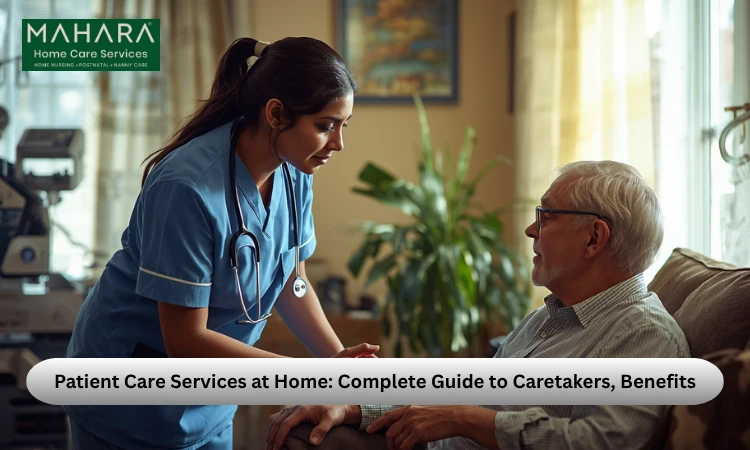
Patient Care Services at Home offer personalized support for elderly people, recovering patients, and individuals who need assistance with daily activities. Professional caregivers can provide help with personal care, mobility, medication reminders, and routine support in the comfort of home. This guide covers the key benefits, services, and factors to consider when choosing home-based patient care.
This guide covers everything you actually need to know what these services include, how much they cost in Mangalore, what a good caretaker does versus a bad one, and how to choose a provider you won’t regret six weeks in.
What Are Patient Care Services at Home?
Patient care services at home means trained caregivers nurses, health aides, or dedicated patient care takers visiting or staying with a patient in their own home to deliver medical support, personal assistance, or both. It’s care that was once only possible inside a hospital, brought directly to where the patient actually lives.
It’s not the same as hiring a domestic helper. A home patient care taker is specifically trained in patient handling, vital sign monitoring, medication scheduling, and basic clinical support. That distinction matters enormously especially if your parent has just been discharged from KMC Hospital or Father Muller Medical College Hospital in Mangalore after a surgery or a cardiac event.
Think about what a hospital is actually designed for. It’s built for the acute phase those first 48 to 72 hours when everything is being stabilized and monitored intensively. Once that’s done, what most patients genuinely need is consistent, calm, personalized attention in a familiar environment. That’s precisely what patient home care services deliver and that’s why families across Mangalore are increasingly choosing this route over extended inpatient stays.
Who needs this most?
-
- Elderly parents living alone while children work in Bangalore, Pune, or abroad
-
- Patients recovering from hip replacement, bypass surgery, or stroke
-
- Individuals managing Type 2 diabetes, COPD, or Parkinson’s disease at home
-
- Bedridden or mobility-impaired patients who need structured daily hygiene support
-
- Terminal illness patients receiving palliative care in familiar surroundings
A patient care taker at home doesn’t replace your doctor. They’re the person who notices something’s off at 2 AM slight confusion, irregular breathing, a fall risk that wasn’t there yesterday and acts before it becomes a crisis.
Types of Patient Home Care Services Available

There’s no single “home care package.” What’s available ranges from a few hours of personal assistance to round-the-clock medical nursing. Here’s exactly how it breaks down:
Personal Care Assistance
This is the most commonly requested service and the one families tend to underestimate until they’re managing it themselves. A home patient care taker helps with bathing, grooming, dressing, feeding, and toileting. Sounds straightforward, but for a family managing a post-stroke parent or a 78-year-old with severe arthritis, this assistance is genuinely life-changing. Most personal care shifts run 8–12 hours, and many families keep a caretaker overnight for safety.
Nursing Care at Home
Registered nurses or GNM-certified professionals who handle wound dressing, catheter care, IV fluid management, injections, blood glucose monitoring, and clinical documentation. If your family member was just discharged with an open surgical wound or needs daily insulin, this isn’t optional it’s medically necessary. Patient home care services at this level require a provider with verifiable nursing credentials. Ask for them upfront, every time.
Post-Surgery Care
One of the fastest-growing needs in Mangalore, particularly after orthopedic procedures (knee and hip replacements) and cardiac surgeries. Post-surgery care typically combines nursing visits for wound management with a full-time caretaker handling mobility assistance. Recovery timelines usually 4 to 12 weeks are measurably better when care happens at home versus extended hospital rehabilitation. Patients report lower anxiety, better sleep, and faster return to baseline function.
Elderly Care Services
Dedicated elderly care goes well beyond medical support. It includes companionship, cognitive stimulation for early-stage dementia patients, fall prevention, sleep support, and regular family updates about behavioral or health changes. Mangalore has a notably high NRI population — many families in Falnir, Kadri, and Bejai hire a patient care taker at home for elderly parents while the next generation lives and works abroad. Mahara Home Care specifically builds care plans for this situation.
Physiotherapy & Rehabilitation
Some Caretaker for Patient at Home include empaneled physiotherapists who visit for structured rehabilitation critical after stroke, post-fracture recovery, and for managing Parkinson’s progression. At MAHARA Home Care, physiotherapy visits can be coordinated within your existing caretaker package so you’re not managing three different agencies and three different invoices.
Roles and Responsibilities of a Patient Care Taker at Home
People sometimes assume a caretaker is just “someone who sits around in case something happens.” That’s not how a trained home patient care taker operates at least not one worth hiring.
A structured daily routine for a trained caretaker looks like this:
Morning (6 AM – 9 AM):
Oral hygiene, assisted bed bath or shower, skin care for pressure points, breakfast assistance, and morning medication administration with written documentation of what was given and at what time.
Daytime:
Mobility transfers (bed to chair, chair to bathroom), hydration and fluid intake monitoring, vital sign checks (blood pressure, temperature, oxygen saturation via pulse oximeter), light prescribed physiotherapy exercises, and cognitive engagement activities for elderly patients.
Evening and Night:
Dinner assistance, wound care if prescribed, repositioning for bedridden patients every two hours (this single step prevents pressure sores-one of the most painful and preventable complications in bedbound patients), medication reminders, and sleep settling support.
Beyond the physical tasks, a skilled patient care taker at home functions as the family’s real-time observer. They’re documenting subtle changes -“Mrs. Almeida seemed more confused than usual this morning” or “BP was 158/96 at 7 PM; called the doctor per the care protocol”-that prevent small changes from becoming full emergencies.
Emotional support isn’t a soft add-on either. Patients who feel genuinely cared for-not just managed through a checklist-recover faster. That’s documented in clinical literature, and it’s something any experienced caregiver understands intuitively.
Key Benefits of Choosing Home Patient Care Services
Let’s be direct: for the majority of recovery and chronic care situations, home patient care services are the smarter choice. Not just emotionally — clinically and financially.
Recovery environment changes everything. A 2022 study in the Journal of the American Geriatrics Society found elderly patients recovering from hip fractures at home (with professional care) had 34% lower rates of delirium and confusion compared to those in inpatient rehabilitation facilities. Your parent’s own bedroom, familiar sounds, family around-that’s not sentimentality, that’s therapeutic.
Personalized attention-genuinely one-to-one. In a typical Mangalore private hospital ward, one nurse manages 8 to 12 patients simultaneously. A home patient care taker has a single patient. The quality and consistency of attention is incomparable.
The cost math is stark. A single day in a Mangalore private hospital-KMC, Father Muller, AJ Hospital-runs anywhere from ₹4,000 to ₹15,000 depending on the ward type and care level. A full-day home patient care taker costs ₹900–₹1,200. Monthly, that’s a difference of ₹80,000 to ₹2,00,000. Those aren’t trivial numbers.
Infection risk drops significantly. Hospital-acquired infections – HAIs -are a genuine clinical risk post-surgery. MRSA, catheter-associated UTIs, respiratory infections from shared ward air. A properly managed home environment carries a fraction of this exposure.
Family stays involved. You’re not restricted to visiting hours. You’re home, cooking your parent’s comfort food, present through the day. That involvement accelerates recovery in ways that are difficult to measure but impossible to miss.
How to Choose the Right Patient Care Service
Don’t just search “patient care services in Mangalore” and call the first sponsored result. There’s a real quality gap between providers and the consequences of a wrong choice fall on someone who’s already vulnerable.
Check Qualifications and Certifications
Ask specifically and directly: Are your nurses GNM orB.Sc. Nursing certified? Do caretakers hold formal certification from an accredited healthcare training institute? A legitimate agency answers this immediately. Any hesitation or vagueness is a flag you shouldn’t ignore.
Background Verification Is Non-Negotiable
You’re inviting someone into your home often overnight, often when family isn’t present. Every reputable provider runs police verification on all staff before placement. Ask for the verification report. Mahara Home Care provides this as standard practice, not as a premium add-on you have to request.
Flexibility in Service Structure Matters
Your family member’s needs will change week to week. Post-surgery, you might need 12-hour care for 6 weeks, then taper to morning visits. Can the agency adjust without penalty? Do they offer 24/7 coverage if needed? What’s the notice period for changes? These logistics reveal how professionally the operation is actually run.
Read Reviews Carefully – Not Just Star Ratings
Look for specific, detailed Google reviews. “The caretaker noticed my father’s fever early and called us immediately” tells you something real. “Good service 5 stars” tells you nothing. Filter specifically for Mangalore-area reviews local providers understand local hospitals, local discharge processes, and local family dynamics in ways that national aggregator platforms often don’t.
Cost Transparency Is a Trust Signal
Ask for a written quote that breaks down every line item. What’s included in the daily rate? What triggers extra charges? What’s the replacement protocol if a caregiver calls in sick? Any agency that quotes one number on a call and a different one in writing walk away. No exceptions.
Cost of Patient Care Services in Mangalore
Pricing for patient care services in Mangalore depends on three primary factors: the type of care required, the duration of engagement, and the qualification level of the caregiver assigned.
| Service Type | Hourly Rate | 8-Hour Shift | Monthly (Full-Time) |
| Basic Personal Care Taker | ₹400–₹500/hr | ₹900–₹1,100/day | ₹18,000–₹22,000/month |
| Trained Caretaker (vitals monitoring included) | ₹500–₹600/hr | ₹1,000–₹1,200/day | ₹22,000–₹26,000/month |
| Registered Nurse (clinical procedures) | ₹700–₹900/hr | ₹1,400–₹1,800/day | ₹28,000–₹35,000/month |
| Physiotherapist (per home visit) | ₹800–₹1,200/visit | — | — |
| Live-in Caretaker (24-hour care) | — | — | ₹25,000–₹35,000/month |
(Rates as of 2026-27 for Mangalore city and nearby areas including Surathkal, Ullal, Kulshekar, and Bajpe.)
A few cost factors worth knowing: nighttime duty carries a 20–30% premium at most agencies. Weekend rates are sometimes slightly elevated. Specialized care dementia patients, ventilator-dependent patients commands higher rates because of the specific skill level required.
One thing that surprises most families: the difference between a basic untrained helper and a properly trained patient care taker at home is often just ₹200–₹300 per day. That’s a very small premium for an enormous difference in the quality and safety of care.
Patient Care Services in Mangalore: What to Expect
Mangalore’s home care sector has matured considerably over the last five years driven by the city’s large NRI and Gulf-migrant community, an aging population concentrated in neighborhoods like Hampankatta, Balmatta, Kankanady, Kadri, and Bejai, and a post-COVID shift in how families think about home-based healthcare.
Patient care services in Mangalore today are more structured than most families expect when they first look into it. Reputable providers like Mahara Home Care operate with documented care protocols, scheduled supervisor visits to patient homes, and direct coordination with treating physicians at hospitals including Father Muller Medical College, AJ Hospital & Research Centre, and KMC Hospital.
What makes a Mangalore-rooted agency more reliable than a national aggregator? Local accountability that’s it. When an agency operates in the city, their staff lives here, their reputation is entirely local, and their response to emergencies is real. Not a call center promising “same day service” from another state that somehow materializes in 72 hours.
Coastal Karnataka also has specific cultural needs that matter in care delivery. Many elderly patients in Mangalore are most comfortable with Tulu or Kannada-speaking caregivers who communicate naturally not through a language barrier. Good local agencies hire specifically for this. MAHARA Home Care does.
Why Choose Professional Home Care Services Over Hospitals
Hospitals aren’t built for long-term care. They’re designed for crisis intervention and once the crisis resolves, every additional inpatient day creates cost, infection risk, and psychological strain on the patient. The comparison with home patient care services isn’t subtle:
| Factor | Hospital Inpatient Stay | Home Patient Care Services |
| Daily Cost | ₹4,000–₹15,000/day | ₹900–₹1,800/day |
| Nurse-to-Patient Ratio | 1:8 to 1:12 | 1:1 |
| Hospital-Acquired Infection Risk | ~7% HAI rate (Indian hospital data) | Significantly lower |
| Patient Comfort Level | Institutional, unfamiliar | Own home, own routine |
| Family Access | Restricted visiting hours | Unrestricted |
| Recovery Speed | Standard | 20–34% faster (evidence-based) |
| Mental Health Impact | Anxiety and disorientation common | Better psychological outcomes |
| Care Customization | Fixed hospital protocols | Built around the individual patient |
For any situation beyond acute medical emergencies skip the extended hospital stay. Professional patient home care services deliver better outcomes at a fraction of the cost, and your family member recovers in the one environment they actually know.
Common Situations Where You Need a Patient Care Taker at Home

Post-Surgery Recovery
After a knee replacement, bypass surgery, hernia repair, or cataract operation the hospital discharges your family member with a sheet of instructions and sends them home. Most families aren’t equipped to manage wound care, mobility restrictions, medication schedules, and diet protocols simultaneously. A patient care taker at home for 4-8 weeks post-discharge bridges exactly this gap and prevents the most common and expensive complication: readmission.
Elderly Care at Home
An 80-year-old with moderate dementia doesn’t need hospitalization they need structure, safety, and familiar surroundings. A trained home patient care taker provides cognitive engagement activities, manages wandering risks, handles daily hygiene with dignity, and picks up on health changes that family members sometimes miss because they’re emotionally too close to the situation to see it clearly.
Chronic Illness Management
Diabetes, COPD, hypertension, chronic kidney disease these aren’t conditions you treat once and move past. They require daily monitoring, consistent medication compliance, dietary management, and regular clinical check-ins. A dedicated home caretaker who visits daily or stays full-time meaningfully reduces hospitalization rates for chronic illness patients. That’s not an opinion it’s documented in NHS England data, AIIMS outcome studies, and WHO home care research.
Disability and Long-Term Support
Patients with permanent physical disabilities, paraplegia, or severe neurological conditions need structured daily support for basic functions and this isn’t a temporary arrangement. Long-term care works best when it’s built around the patient’s own home and established routine, not adapted to an institutional setting that was never designed with them in mind.
Get Trusted Patient Care Services at Home Today
Your parent deserves to recover in their own home with their own things around them, food they recognize, family close by. You deserve to stop carrying the entire weight of daily caregiving on top of everything else your life demands.
MAHARA Home Care Services provides trained, background-verified patient care takers and nurses across Mangalore covering Kadri, Bejai, Hampankatta, Kankanady, Kulshekar, Surathkal, Bajpe, and surrounding areas. Services can be started within 24-48 hours. No mandatory long-term contracts. Transparent pricing, always in writing.
Call or WhatsApp:+91 7204439333
Book online: maharahomecare.com
Start with a free 20-minute consultation with MAHARA’s care coordinator they’ll understand exactly what your family member needs, explain what it costs, and tell you who they’d send. No obligations.
Don’t wait for a crisis to force the decision. One fall. One missed dose. One unnoticed fever. These become emergencies. A trained patient care taker at home prevents exactly that quietly, every day.
Conclusion
Choosing patient care services at home isn’t giving up it’s often the most informed decision a family can make. For post-surgery recovery, elderly care, and chronic illness management in Mangalore, home-based professional care consistently delivers better outcomes than extended hospital stays, at significantly lower cost, and with far better quality of life for the patient. The key is choosing the right provider one with trained and verified staff, genuine local presence, clear pricing, and the flexibility to adapt as your family member’s needs change. MAHARA Home Care is built around exactly those standards. Start with a conversation, and you’ll have a clear picture quickly.
Frequently Asked Questions
What is included in patient care services at home?
Patient care services at home cover a wide range personal hygiene assistance, medication reminders, vital sign monitoring (blood pressure, temperature, SpO2), wound dressing, mobility support, physiotherapy coordination, and emotional companionship. Clinical packages also include IV care, catheter management, and medical documentation shared with the treating doctor. In Mangalore, MAHARA Home Care customizes each plan around the patient’s specific diagnosis and discharge instructions.
How much does a patient care taker at home cost in Mangalore?
A trained patient care taker at home in Mangalore costs ₹900–₹1,200 per 8-hour shift. Full-time live-in care runs ₹22,000–₹35,000 per month depending on care complexity. Registered nurse visits are priced at ₹700–₹900 per hour. These rates are substantially lower than equivalent inpatient hospital costs and don’t carry ward charges, hospital food markups, or administrative fees on top.
Are home caregivers trained professionals?
At established agencies yes. MAHARA Home Care hires caregivers with formal training in patient handling, basic clinical care, and emergency response protocols. Nursing staff hold GNM or B.Sc. Nursing certifications from recognized institutions. All staff undergo police background verification before their first placement. Ask your provider for the caregiver’s training certificate and verification report before the first shift this is standard, and any agency that resists sharing it should be avoided.
Can I hire a caregiver for short-term needs?
Absolutely. Short-term placements are common for post-surgery recovery (2–8 weeks), temporary family situations, or trial periods before committing to ongoing care. MAHARA Home Care offers flexible arrangements hourly, daily, or weekly with no mandatory minimum contract for most service types. If you’re unsure whether long-term care is needed, start with a 2-week engagement and reassess from there.
Is home care better than hospital care for recovery?
For the post-acute recovery phase after the critical medical intervention is complete home patient care services consistently outperform extended hospital stays on most clinical outcome measures. Patients show faster functional recovery, better mental health, and significantly lower infection risk at home. A 2021 WHO analysis found patients in home-based recovery programs returned to baseline function 30% faster. Hospitals are right for acute emergencies; home care is right for everything that follows.
How do I find patient care services in Mangalore?
Start with locally-rooted agencies. MAHARA Home Care is specifically established in Mangalore, with staff familiar with the city’s hospitals, neighborhoods, and local language preferences. You can also get referrals through the discharge desk at KMC Hospital, AJ Hospital, or Father Muller Hospital they often know reliable local providers. Check Google reviews filtered for Mangalore specifically rather than relying on generic national platforms whose reviews may reflect other cities.
What’s the difference between a nurse and a patient care taker at home?
A registered home nurse handles clinical procedures wound care, IV management, catheter care, injections, and medical documentation that feeds directly back to your treating doctor. A patient care taker at home handles daily personal care bathing, feeding, mobility support, companionship, and safety monitoring. Many Mangalore families use both a nurse for once or twice-daily clinical tasks, and a full-time caretaker for round-the-clock daily support. MAHARA Home Care can arrange both under one coordinated care plan.
How quickly can a caregiver be arranged in Mangalore?
For standard requests, Mahara Home Care typically places a caregiver within 24-48 hours of the initial consultation. Emergency placements for patients being discharged earlier than expected can often be arranged on the same day, depending on availability. Contact the care team directly by phone or WhatsApp for the fastest response; online form submissions take longer to process.

Pingback: Patient Caretaker at Home in Mangalore - Mahara Homecare